Beautiful time spent at Jorasanko Thakur Bari, Kolkata. Why you should also visit
It was 1 PM on 28th September, and one thing I wanted to do at any cost was visit Jorasanko Thakur Bari, Kolkata. Team Blogchatter had organised its yearly retreat in Kolkata this year. While exploring the city and deciding which places to visit, I researched the Tagore Museum and wrote a blog post. Since then, it has topped my travel itinerary and subconscious mind.
After the Blogchatter Anthology launch, three community friends left the hotel to explore the city, and I quickly joined them. While waiting for the cab, we planned the places we wanted to visit, and I had just one name on my list—Jorasanko Thakur Bari.
Old buildings take me back in time
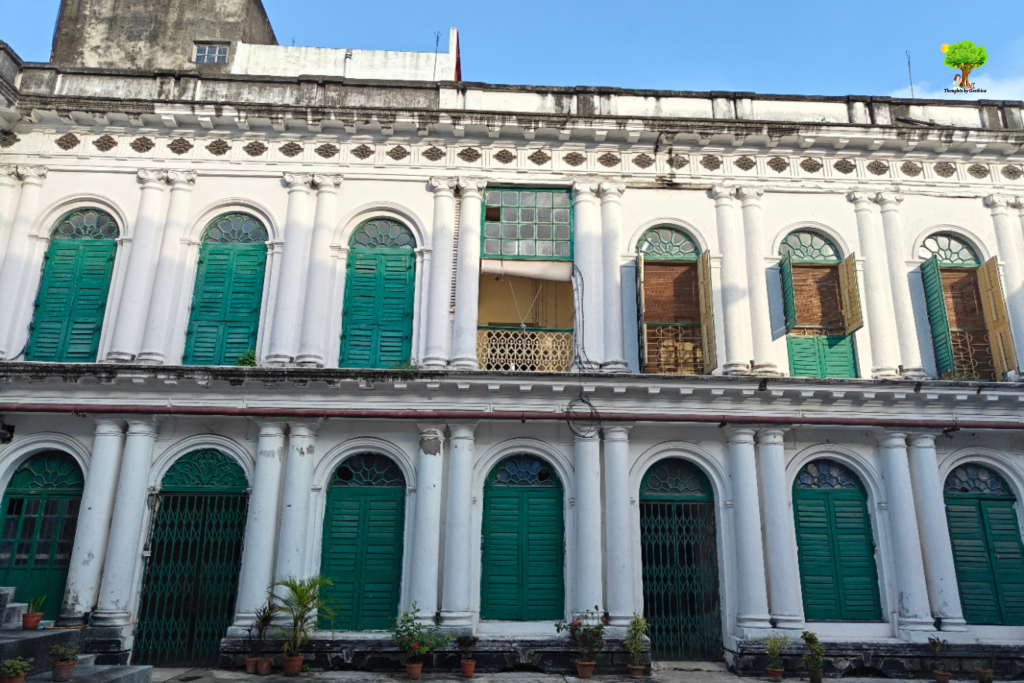
Finally, we were there. It was a huge, two-storeyed red building spaced out with corridors and a common aangan. It reminded me of my old house at Darya Ganj. Though my home was a small two-room flat, the open corridors and old steps of the staircase took me back in time.
Jorasanko Thakur Bari, also known as the Tagore museum, was the same as shown in the photos on the web. But one thing my eyes caught and my camera captured was Rabindranath Tagore sitting in front of his house, quietly gazing at the beauty of red bricks and the young crowd of this era.
See the picture and tell me – Can you spot Tagore?

Exploring the house barefoot was nostalgic
We had to take off our shoes and enter the house. It felt like we were meeting Tagore in person, who prefers coming barefoot inside the house. Out of the 600 rooms, only 150 are open for visitors. It is a beautiful and nicely maintained house. The stairs on all sides of the corridors, the up-and-down placement of different rooms and the clean floors all add to the mystic aura of Jorasanko Thakur Bari, Kolkata.
Guards were sitting in front of almost every room. They had to secure Tagore’s precious possessions and prevent us from taking photos or videos. That’s when I found a huge wall with the family tree and I simply wanted to frame it on my mobile but couldn’t. It’s carved on my mind now.
Jorasanko Thakur Bari, Kolkata, comes alive when…
You walk through the corridors and read all the details framed on the wall. Minute information is recorded, such as who visited Tagore and at what time. Those frames brought Tagore’s last days to life so beautifully. You could actually envision yourself in all the events.
We entered the museum as 4 friends and gradually lost ourselves as individuals exploring Tagore’s life history. I was excited to see his study room. A wooden table and chair were accompanied by a wall mirror. I wondered whether Tagore often saw his reflection while writing.
Another room carefully reserved the painting brushes, colours and mixing palette used by Tagore before he left the abode. Although I didn’t like any of his paintings.
Education leads to intellectual collaboration
An educated person can only understand the importance of imparting knowledge to many more people. Shantiniketan was Tagore’s voice to reach out to the world and bring in the best teachers who would have helped upgrade the education system in India.
Different floors were dedicated to countries that showcased their relationships with Tagore for the betterment of India.
Handwritten notes at Jorasanko Thakur Bari, Kolkata
There were handwritten notes in the room where Tagore breathed his last. Everything was clean and dusted which made the house a living entity of its own. You feel invited as you scroll through the floors and grasp Tagore vibes from all over the place. There’s Bengali music running in the background that acts as a perfect reason to lose yourself to the divinity of those times.
Other interesting things that caught my attention were the kitchen, library, low-sitting dining table, crockery and a plastic model set up in the corridor, same as the stretcher and the team of doctors would have treated Tagore on his house balcony just before his death.
A few are born and die in the same house and Tagore was one of them.
You need an observant eye to enjoy the museum and forget about life outside. Everyone should visit Jorasanko Thakur Bari in Kolkata at least once when in the city, not to know Tagore but to feel his presence.
Jorasanko Thakur Bari address:
267 Rabindra Sarani, Singhi Bagan, Jorasanko,
Kolkata, West Bengal 700007, India
(Campus lane: 6/4 Dwarakanath Tagore Lane)
Jorasanko Thakur Bari entry fees:
- ₹20 to ₹50 for general Indian visitors,
- ₹10 to ₹20 for students, and
- ₹150 to ₹500 for foreign nationals
Jorasanko Thakur Bari nearest metro station:
Girish Park Metro Station, located on the Blue Line of the Kolkata Metro. Alternative nearby stations include Mahatma Gandhi Road and Sovabazar Sutanuti
Cafe near Jorasanko Thakur Bari:
Cafe Valentino, Maa Tara Cafe, and Mitra Cafe, offering a mix of cosy seating, fast food, and classic Bengali snacks
FAQs
Q1. Why should you visit Jorasanko Thakur Bari in Kolkata?
A1. You should visit Jorasanko Thakur Bari not just to learn about Rabindranath Tagore, but to truly feel his presence. The house functions as a living entity filled with historical rooms, handwritten notes, and a deep, divine, nostalgic aura enhanced by soft Bengali music.
Q2. What can you expect to see inside the Jorasanko Thakur Bari museum?
A2. Inside the museum, you will find dedicated floors showcasing global relationships with Tagore, the room where he breathed his last with his handwritten notes, the family kitchen, a library, low-sitting dining tables, unique crockery, and a historic plastic model set up in the corridor mimicking his medical team’s arrangement.
Q3. How many rooms are open to the public at Jorasanko Thakur Bari?
A3. Out of the massive 600 rooms inside the heritage mansion, currently about 150 rooms are fully open and well-maintained for visitors to explore.